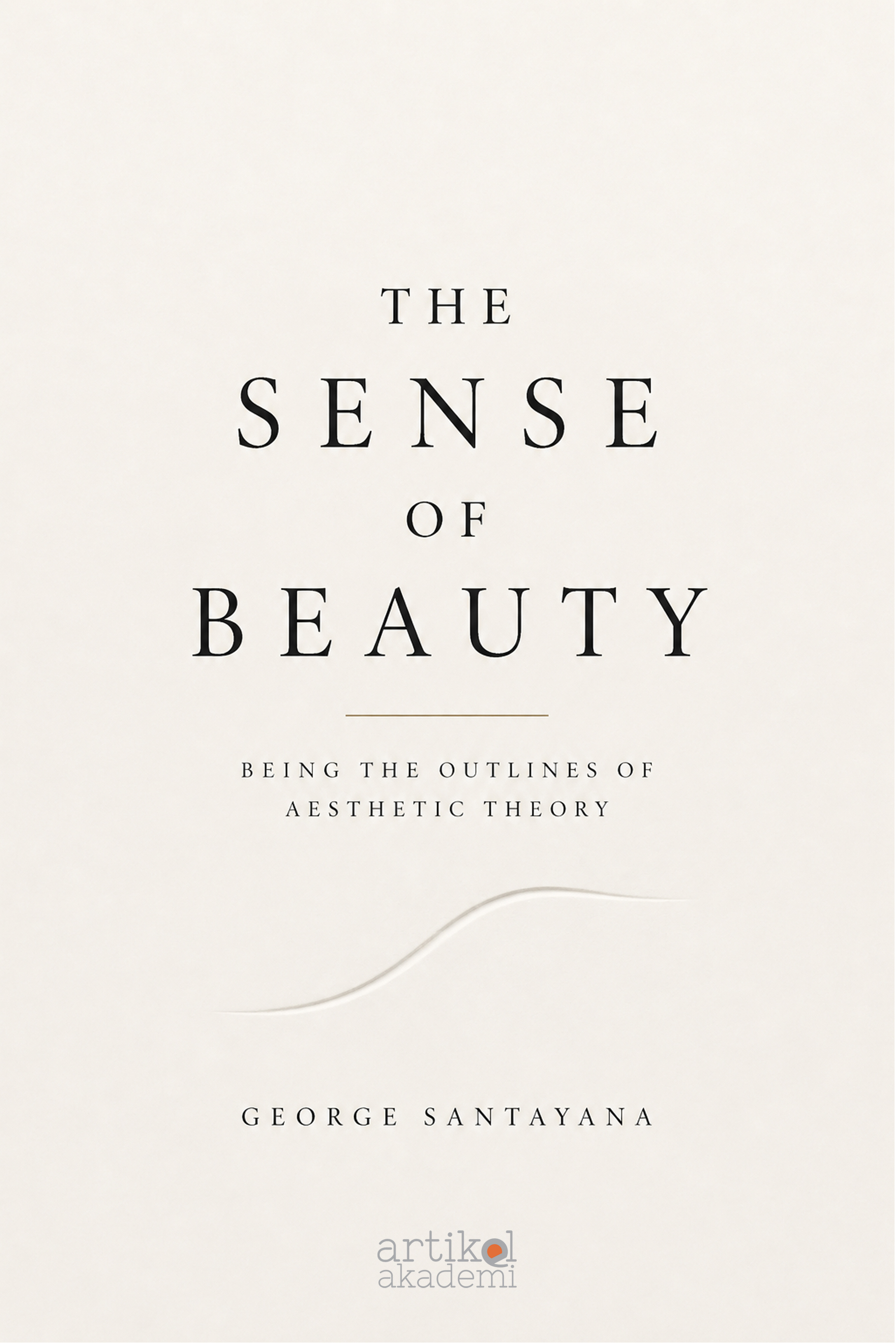
The republication of George Santayana’s The Sense of Beauty: Being the Outlines of Aesthetic Theory marks a significant moment for contemporary scholarship in philosophy, art history, and visual communication. First published in 1896, during a period dominated by Hegelian idealism and rigid moralism, Santayana’s treatise emerged as a radical departure, grounding aesthetics in the psychological and biological realities of the human experience.
Santayana’s primary contribution lies in his rejection of beauty as an abstract, metaphysical property. Instead, he defines beauty as “pleasure objectified”—a vital shift that transformed aesthetics from a study of the divine or the absolute into a rigorous analysis of human perception and emotion. By situating aesthetic judgment within the realm of naturalism, Santayana bridged the gap between the sensory faculties of the subject and the formal qualities of the object.
This edition invites a new generation of scholars to engage with Santayana’s systematic tripartite division of beauty:
The Materials of Beauty: An exploration of how sensory inputs—color, sound, and light—act as the foundational elements of aesthetic value before they are even shaped by intellect.
The Value of Form: An analysis of the mind’s role in synthesizing these materials into coherent structures, highlighting the harmony between cognitive processes and external reality.
The Power of Expression: A profound look at how associations and memories lend deeper, often personal or cultural, significance to the objects we perceive.
In the current landscape of the 21st century—where disciplines such as Interaction Design, Visual Communication, and Neuroaesthetics seek to understand the intricate relationship between the human interface and emotional response—Santayana’s insights remain strikingly prescient. His work provides a theoretical bedrock for understanding how visual form translates into meaning and how the “sense of beauty” serves as a fundamental component of human flourishing.
As we reintroduce this masterpiece to the academic canon, it serves not only as a historical reference but as a living document. It challenges us to reconsider the role of the aesthetic in our daily lives, urging a return to the sensory and the human in an increasingly digital and mediated world.
We are proud to present this meticulously curated edition, confident that it will continue to inspire rigorous debate and profound reflection among students, educators, and practitioners alike.